Blog
AI in product photography – a revolution that is already underway
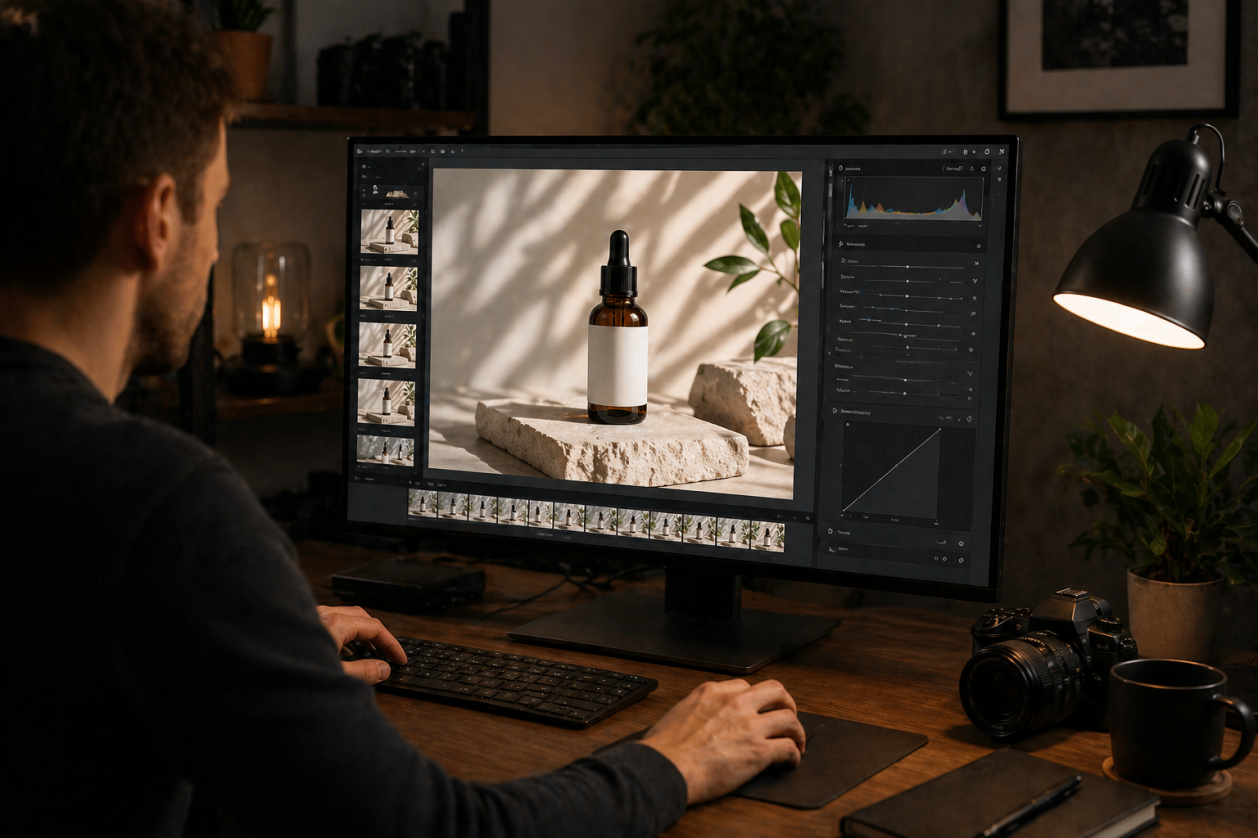
Just a few years ago, product photography required a professional studio, expensive equipment and lighting, but today AI is playing an increasingly important role in product photography, as it allows us to work with smaller budgets and even shorten the production time on large projects.
What is AI in product photography?
AI in product photography means using technology and algorithms to create, edit and enhance product images. It can even include generating entirely new images without the direct involvement of a photographer.
Advantages of AI in product photography
One of the advantages is faster image production, because AI can remove backgrounds, retouch photos and improve lighting and contrast more quickly. Another advantage is lower costs. You do not need a huge budget to make product photos attractive and eye-catching. A third advantage may be the visual consistency of the brand. AI can automatically adjust colours, contrast and style to create a more coherent look.
Disadvantages of AI in product photography
One disadvantage of AI is that it can sometimes distort the appearance of the product, which is very risky in sales. Another disadvantage is the representation of details, such as materials. They often look much less realistic. A third disadvantage is the legal risk and the possibility of misleading customers if the image does not accurately reflect the real product.
To sum up, AI in product photography works very well for fast, large-scale e-commerce, but despite this, it still falls short when authenticity, realism and details matter.
AI is becoming an increasingly important part of work, and it is no longer just a temporary trend, but a new way of working.
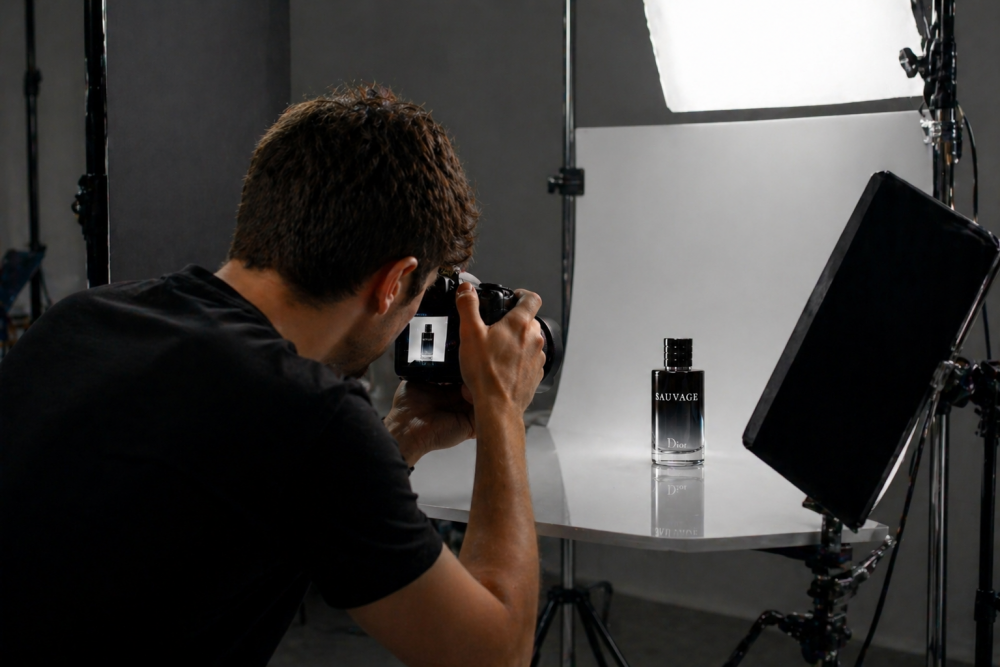
What does it look like in practice, and where does it really make sense?
- Generating images without a physical product – We can create very realistic visualizations without a professional photo shoot. However, this is not always the best solution, as AI can sometimes be inaccurate.
- Easy background removal and retouching – Tools such as Remove.bg or Adobe Photoshop with AI features can remove the background with one click, improve lighting and even remove imperfections. This is a huge time saver.
- Generating scenes – Instead of building a physical set, AI can create the background for us or adjust the lighting and mood. This is ideal for small businesses.
- Where AI falls short – If someone thinks that everything is always perfect with AI, unfortunately, that is a mistaken assumption. AI struggles with realistic details, makes mistakes in proportions and does not guarantee 100% consistency with the real product.
When do we use AI?
We have been asking ourselves this question for quite some time, because many people want to use AI for everything — but it does not work quite the way some people think.When does AI make sense in product photography?
- Large online stores / marketplaces – If you have hundreds of products, AI can make your work easier and help you save both time and budget.- Small budget / new business – When you are just starting out as a photographer or your budget is quite limited, AI can definitely be useful, for example in combination with Canva. In social media, variety and regularity matter, and AI allows us to create lifestyle scenes in different versions — for summer, winter, and so on.- Personalization for different markets – In other words: a different country means a different style, and a different target group means a different background and mood.Where does AI work best?
One of the areas where AI works best is social media, because it requires constant content. AI is also great for advertising, as we can generate even 20 versions of a single creative concept. Product catalogues and wholesalers can also benefit a lot — it is easy to generate images on a white background and quickly update offers. AI also works well for products that are difficult to photograph, such as furniture, decorations or large-format products.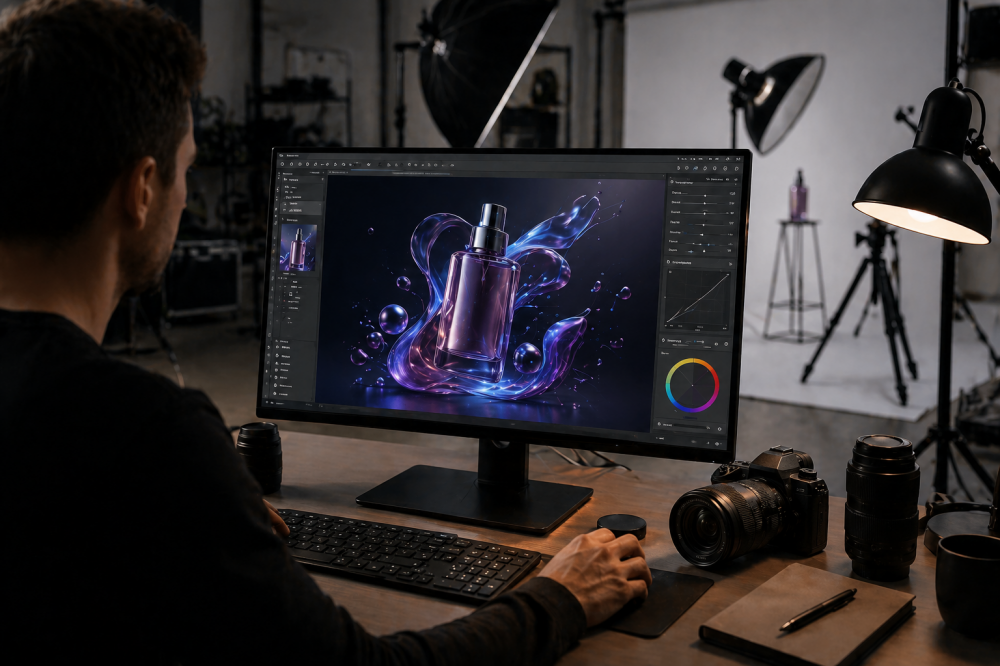
What to be careful about when using AI in product photography
Product distortion — the most important issue – AI can enhance and modify a photo so much that it no longer reflects reality. A different colour, material, proportions or texture may lead to customer complaints and even legal problems.Inconsistency between images – When AI generates different versions of the same product, customers may get the impression that they are looking at different models.“Hallucinations” of details – AI can add elements that were not there and should not be there, or even change the shape of the product.Copyright and sources
AI can create different backgrounds and stylings that are similar to someone else’s photos. Too much inspiration may be considered plagiarism.Overly “perfect” marketing – Perfect, artificially enhanced images can reduce customer trust, because authenticity matters.Labelling and transparency – In some cases, it is worth informing customers that AI was used in a given project.Challenges and limitations
Despite its truly huge potential, AI is still not 100% accurate. Generated images may look unnatural and can significantly change the appearance of the product. In industries where precision is extremely important, such as jewellery, supervision by someone experienced in product photography is necessary.Will AI replace photographers?
No. AI is more likely to change the work of photographers than replace them. Professionals are still needed, because they are increasingly becoming creative directors who supervise the entire process of using AI.How to start using AI in product photography?
1. Start with simple tools, such as background removal or image quality enhancement.2. Test scene generation — compare the results with real photos.3. Create variants — different styles, colours and contexts.4. Analyse sales results — which images convert better?The best AI tools for product photography- Colabz AI- AdCreative.ai- Adobe Illustrator- Adobe PhotoshopSummaryAI in product photography is not a temporary trend, but a major change in the way we work. It gives us huge possibilities in terms of editing, speed, costs and creativity, but it requires conscious use. Companies that use AI can already gain a competitive advantage.
#fotografiaproduktowa#AIwfotografii#sztucznainteligencjawfotografii#zdjęciaproduktoweAI#fotografiaproduktowadlaecommerce#zdjęciadosklepuinternetowego#zdjęcianaAmazon#wizualizacjeproduktowe#aranżacjeproduktoweAI#materiałyreklamowe#contentproduktow

Rafał
Specjalista ds. marketingowo-handlowych